
Gap’s Powerful brand collaboration strategy: How collabs Restored Relevance
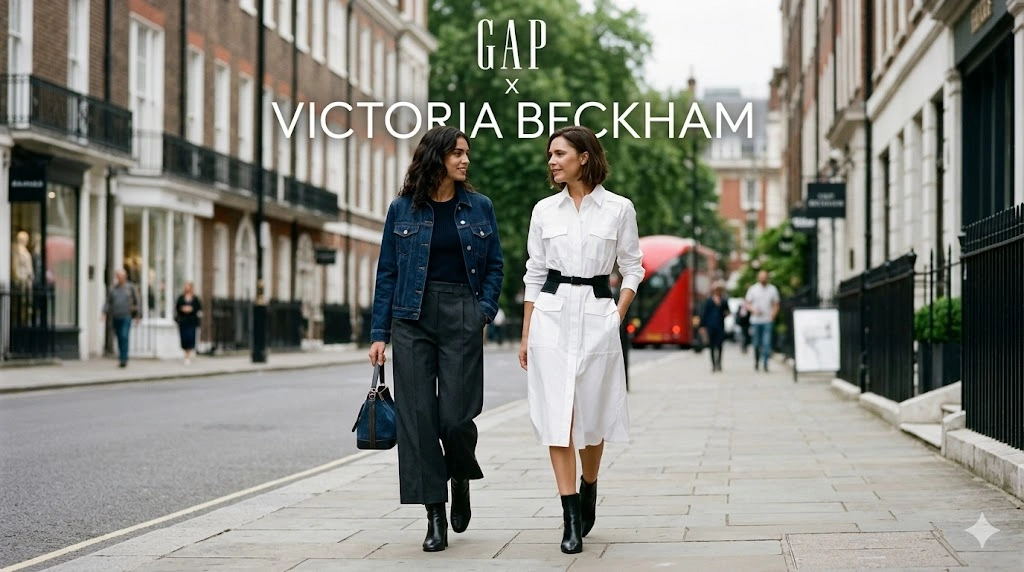
Most fashion brands think they have a product problem. But Gap proved something else.They had a positioning problem , and they solved it without reinventing what they sell.
The Numbers Tell a Different Story
In 2023, Gap was still losing money — over $202 million, to be exact.
A year later, the narrative had completely shifted. The brand reported $502 million in profit, marking a sharp and unexpected turnaround. By 2025, the momentum hadn’t slowed. Growth continued, supported by seven consecutive quarters of same-store sales increases and the strongest margin performance the company had seen in over 25 years.
This kind of recovery doesn’t happen by accident. And more importantly, it didn’t come from a design breakthrough or a product reinvention. It came from a shift in strategy.
They Didn’t Change the Product , They Changed the Narrative
Gap didn’t suddenly become a better design brand. They did something smarter. They changed who was vouching for them. When Richard Dickson took over in 2023, he applied a playbook already proven with Barbie: Build cultural relevance before pushing product.
The Playbook: Proximity to Cool
Gap stopped trying to be cool. Instead, they focused on something far more strategic: staying consistently close to it. Because the reality is simple.
Cool isn’t something you can manufacture. It’s something you build proximity to over time . And this until the association starts to feel natural, and eventually, undeniable.
The Brand Collaboration Strategy (And Why It Worked)
Gap didn’t rely on a single collaboration to shift perception. They built a system.
Over time, the brand layered partnerships with distinct cultural signals — bringing in Zac Posen as Creative Director, collaborating with Victoria Beckham, and aligning with names like Cindy Liang, Cult Gaia, and Madhappy. Individually, each move mattered.
Collectively, they reshaped how the brand was perceived. Because none of these collaborations were random. They acted as a form of permission where each one subtly told the same story to the customer:
This is a brand people you already trust are choosing again.
The Real Strategy is World Building
Most brands still approach collaborations as a marketing tactic. Gap treated them differently. They used them to build a world. Instead of chasing visibility, they focused on creating a network of cultural signals — each partnership reinforcing the same narrative, from a different angle.
Because the objective was never just to be seen. It was to shift perception. Not reach, but relevance. And more precisely, the transfer of it.
Why Most Brands Fail at Collaboration
The problem is rarely the strategy itself. It’s the lack of patience.
Most brands launch a single collaboration, expect immediate results, and pull back the moment the impact isn’t visible. They treat partnerships as short-term activations, rather than long-term investments. Gap approached it differently.
Over the span of two years, they executed more than a dozen collaborations, committing to the strategy for over a year before expecting the market to respond. They gave the narrative time to settle, to repeat, and ultimately, to stick.
Because that’s how perception works. Not instantly, but cumulatively. And that’s exactly what they allowed their strategy to do — compound.
The Key Insight Fashion Brands Miss
The real power of collaboration doesn’t lie in exposure. It is built slowly, over time. Because a single partnership won’t shift perception. But repeated alignment, with the right partners, eventually will.
For the strategy to work, there has to be a natural overlap between audiences. The partner needs to carry real cultural credibility ,not just visibility .And the collaboration has to be repeated long enough for the signal to settle.
That’s when perception starts to change. Not through one moment, but through accumulation.
What This Means for Canadian Fashion Brands
Most Canadian fashion brands don’t struggle because of their product.They struggle because of how they’re perceived. Too often, the focus remains on improving the offer ,refining design, upgrading materials, pushing for a more “premium” look , without addressing the signals that actually shape perception.
Because looking premium isn’t enough. What matters is being associated with premium. And that’s where the gap appears.
There is often a lack of strategic proximity to global culture , the kind that naturally positions a brand within a broader, more desirable narrative. Gap understood this.
They didn’t become relevant again by upgrading their product.They became relevant by upgrading who validated them.
Final Thought Gap brand collaboration strategy
What Gap ultimately proved is simple.
Relevance is never out of reach. Whether you’re a legacy brand or a new entrant.But it requires a different mindset. One that is strategic enough to choose the right associations.
Patient enough to let them take effect. And visible enough to ensure they are actually seen.
Because collaboration is not a shortcut. It’s a positioning strategy that compounds — over time, through repetition, and through consistency.
What do you think ? Are collaborations overused, or just misunderstood ?
If your brand is entering a new market (France, Europe), collaboration is not optional — it’s structural.
→ Discover my France Market Entry System for Fashion Brands