
10 Things Montreal Fashion must Learn from Paris to Compete Globally
Montreal fashion and Paris fashion are often seen through the same lens — creativity, style, and cultural expression. However, behind the aesthetics, the reality is very different.
While Paris operates as a global fashion authority shaped by history, structure, and powerful systems, Montreal evolves within a more agile and emerging ecosystem.
These differences are not just cultural — they also directly impact how brands grow, scale, and position themselves in the market.
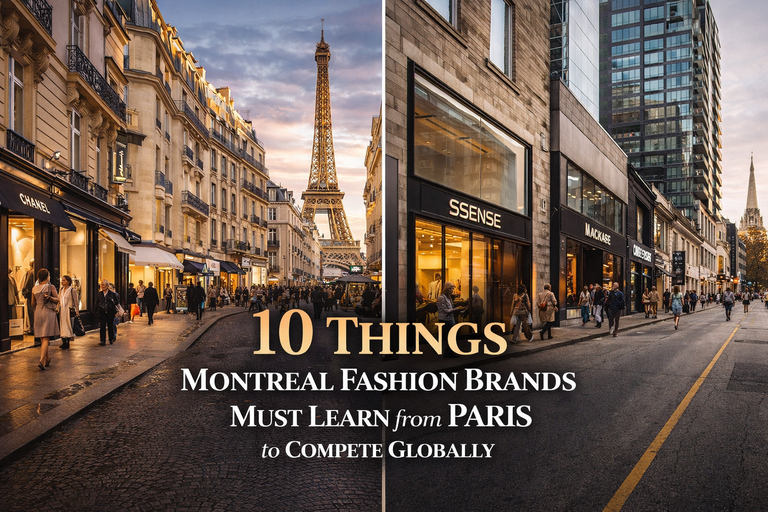
In fact, what separates Paris brands from many Montreal brands is not necessarily the product, but the systems, strategy, and long-term vision behind it.
Rather than viewing this gap as a limitation, it reveals an opportunity.
By understanding how Paris fashion operates — from brand image to operations and business structure — Montreal brands can unlock new ways to strengthen their positioning and compete on a global level.
In this article, we explore 10 key lessons Montreal fashion brands can learn from Paris to build stronger, more scalable, and more influential businesses.
Build Strong Systems, Not Just Beautiful Products
Paris brands like Sézane and Sandro operate on highly structured systems that support consistency and scalability.
Behind their collections lies a clear operational framework — from product development to distribution.
In contrast, Montreal brands such as Frank And Oak or Matt & Nat often prioritize product and brand values, but can face challenges when systems are not formalized. Strengthening operational workflows is key to sustaining growth.
Montreal Fashion to Invest in Brand Image as Much as Product
Paris brands understand that perception drives value. Jacquemus, for example, has built a powerful identity through strong visual storytelling and highly curated campaigns.
Montreal brands like Aritzia also demonstrate the impact of image when executed strategically.
However, many emerging brands still focus primarily on product, underestimating the long-term power of brand perception.
Master the Power of Public Relations
In Paris established PR ecosystems drives visibility. Brands such as Dior and Balmain maintain strong relationships with global media, ensuring constant presence in the fashion conversation.
In Montreal, brands often rely more on organic visibility. While labels like SSENSE amplify exposure digitally, a structured PR approach remains underdeveloped across the broader ecosystem.
Create a Clear and Recognizable Brand Identity for Montreal Fashion
Strong and consistent codes defines Paris Brands. Saint Laurent, for example, maintains a distinct silhouette and aesthetic that remains recognizable over time.
Montreal brands such as Denis Gagnon show strong creative identity, but consistency across seasons and platforms can vary.
Defining and maintaining clear codes strengthens long-term recognition.
Structure Product Development and Drops
Paris brands carefully control their product calendar. Sézane is known for its structured drops, creating anticipation and maintaining brand rhythm.
Montreal brands often operate with more flexible timelines, which can lead to inconsistency.
Adopting more structured release strategies can significantly enhance market impact.
Elevate Perceived Value Through Craftsmanship
French fashion is deeply rooted in craftsmanship. Houses like Chanel and Hermès have built their reputation on exceptional savoir-faire.
In Montreal, brands such as Rudsak emphasize quality, but the narrative around craftsmanship is often less central. Strengthening this link can elevate brand perception and pricing power.
Think Long-Term, Not Just Seasonal
Paris fashion houses operate with long-term vision. Louis Vuitton continues to evolve while maintaining its heritage and strategic positioning.
Montreal brands, often navigating tighter markets, may prioritize short-term performance.
Shifting toward long-term thinking can support stronger brand development.
Align Creativity with Business Strategy
In Paris, creativity always aligns with business objectives. Celine exemplifies how creative direction reinforces brand positioning and commercial success.
Montreal designers often operate more independently, which can create a disconnect between creative vision and business structure.
Alignment between the two is essential for growth.
Montreal Fashion could Build Systems That Support Growth
Scaling in Paris is supported by strong infrastructure. Brands like Balenciaga operate within systems that enable global expansion.
Montreal brands, including Frank And Oak, have faced challenges when scaling without fully developed operational systems. Building infrastructure is key to sustainable growth.
Control Brand Narrative and Distribution
Paris brands carefully control their narrative and distribution. Hermès is known for its selective distribution strategy, reinforcing exclusivity and desirability.
Montreal brands often adopt broader distribution models, which can dilute positioning.
Being more intentional about where and how products are sold can strengthen brand authority.
Conclusion about things Montreal Fashion can implement from Paris
The future of fashion is Creativity & System
Ultimately, the difference between Montreal and Paris is not about creativity — it is about structure.
Although Montreal’s fashion industry continues to evolve through structured initiatives led by organizations such as mmode, a key player working to connect designers, manufacturers, and institutions while driving innovation and global competitiveness.
Montreal brings innovation, flexibility, and strong creative potential.
Paris demonstrates how systems, consistency, and long-term vision turn that creativity into lasting authority.
The future of fashion lies in combining both — creativity with structure, agility with systems.
For a deeper look at how these systems operate behind the scenes,
→ explore how Montreal fashion brands strategically operate (insider perspective).
About An Epikurean
An Epikurean explores fashion through structure, strategy, and modern wardrobe intelligence.


2 Comments